
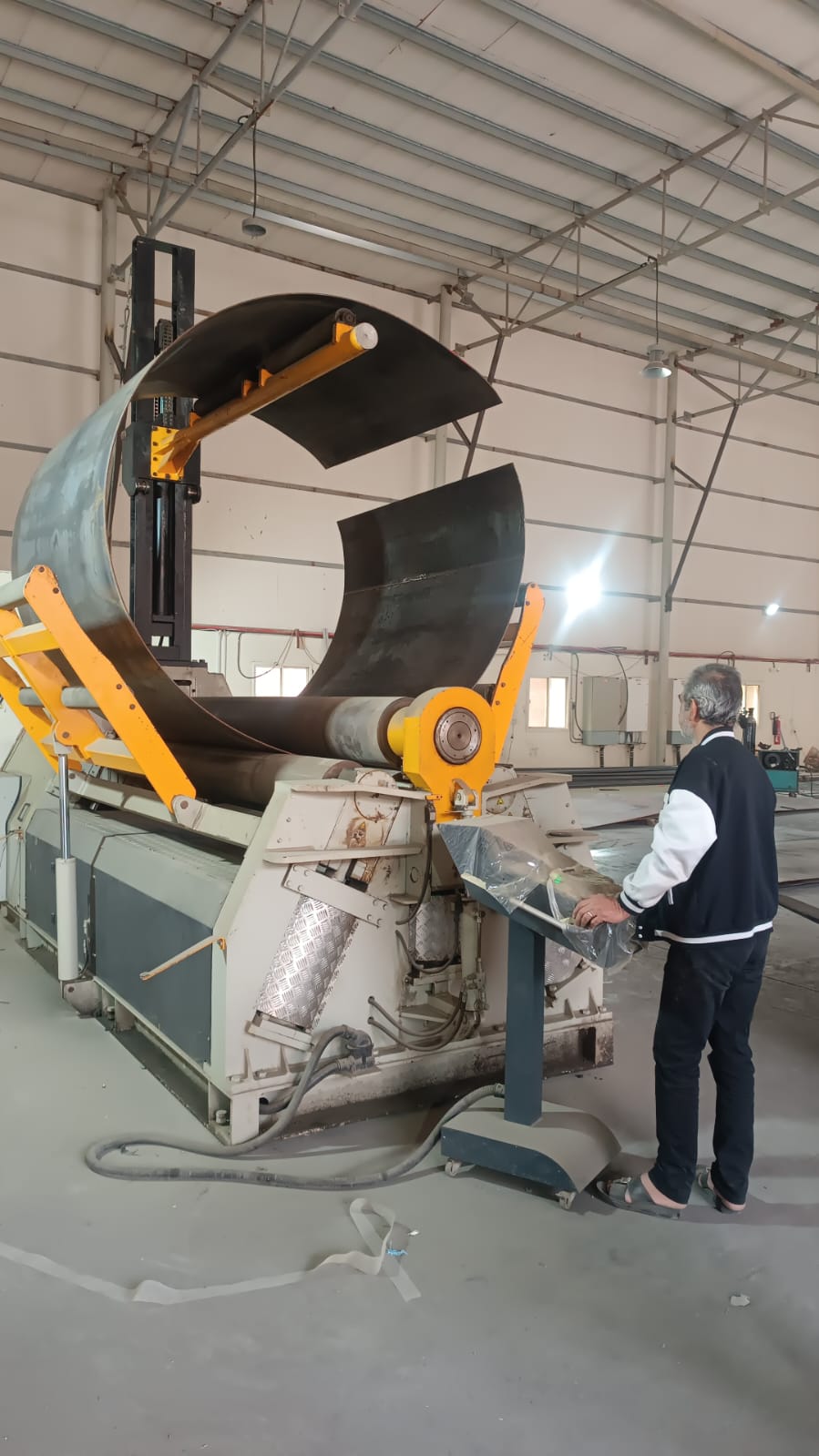
Introduction to Hydraulic Rolling Machines
In the field of metal processing, Hydraulic Rolling Machiness have become indispensable due to their unique working principle and wide range of applications. Whether it is steel bending in the construction industry, or automotive and shipbuilding plate shaping, Hydraulic Rolling Machiness play a pivotal role. In this paper, the role of the Hydraulic Rolling Machines, application areas and the basic classification of the overview, and focus on 3-roll and 4-roll Hydraulic Rolling Machines features and its comparative analysis!
-
Basic classification:3-roll and 4-Hydraulic Rolling Machines
Hydraulic Rolling Machines is a key equipment in the field of metal processing, widely used in a variety of metal materials bending process. According to the different structure, Hydraulic Rolling Machines is mainly divided into two types of 3-roll and 4-roll. Although these two types of Hydraulic Rolling Machines in the working principle has a certain degree of similarity, but in the structure, function and performance but show their unique characteristics.
-
Process Overview
First, the operator places the sheet metal to be processed on the table of the Hydraulic Rolling Machines and adjusts the position and angle of the rollers according to the radius, angle and shape of the required bend. This step is critical as it determines the shape and accuracy of the final bend in the sheet.
Next, themachine is started and the rollers begin to move in the preset direction and speed of rotation. Under the action of the rollers, the plate begins to be subjected to pressure and friction, and gradually undergoes bending deformation. The contact between the rollers and the plate is continuous, so the plate can realize smooth and uniform bending.
In the bending process, the control system of the Hydraulic Rolling Machines plays a key role. It monitors the bending state of the plate in real time, including the bending angle, radius of curvature and other parameters, and makes real-time adjustments based on these data. For example, if the bending angle of the plate is detected to be too large or too small, the control system will automatically adjust the position or pressure of the rollers to correct the deviation and ensure processing accuracy.
In addition, Hydraulic Rolling Machiness are usually equipped with safety protection devices, such as overload protection and emergency stop, to ensure the safety of personnel and equipment during processing. These devices are able to respond quickly in the event of an abnormal situation and prevent accidents from occurring.
When the plate has completed the required bending process, the roll bender will automatically stop working. At this point, the operator can remove the processed sheet for subsequent processing or inspection. If you need to continue processing other plates, just repeat the above steps.
Features of 4-Roll Hydraulic Rolling Machines
4-Roll Hydraulic Rolling Machines is usually presented as a compact and sturdy body design, the appearance of smooth lines, the overall structure is stable. Its appearance color is usually adopted industrial standard color, such as dark gray or blue, which is not only beautiful and generous, but also easy to identify in the factory environment. In addition, the control panel is well laid out, with clear and easy-to-understand operation buttons and displays, making it easy for the operator to grasp the machine's operating status.
Brochure
when an unknown printer took ga lley offer typey anddey.
PDF. Download